 Sebastian Schkudlara
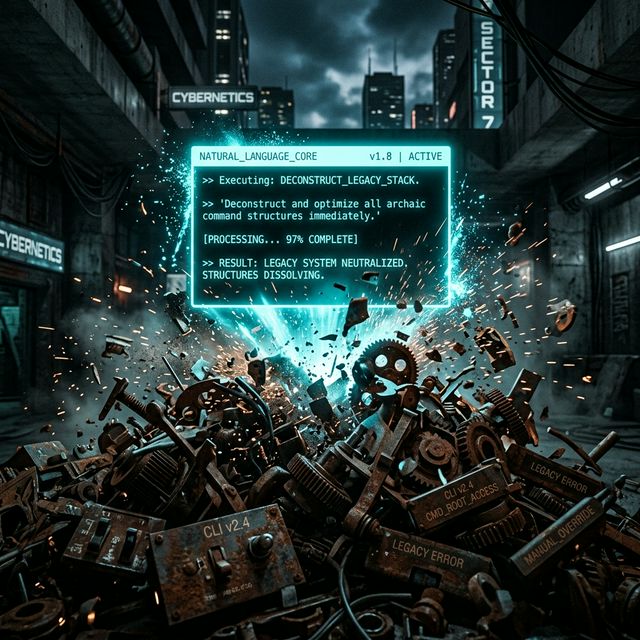
The Death of the Flag-Soup CLI
If I have to memorize one more obscure combination of hyphenated flags just to make a CLI do its one supposedly simple job, I’m going to lose it. Traditional flag-heavy command-line tools are dying—and honestly? Good riddance.
The shift is already visible across the developer community. Tools like GitHub Copilot CLI, JetBrains Junie CLI, and countless open-source projects are all converging on the same idea: let developers just say what they want instead of memorizing arcane syntax. We’ve been building toward this with Traylinx Cortex, where we recently shipped Phase 3 of our Natural Language Interface. The new standard isn’t -r --force --no-pager --dry-run. It’s just telling the computer what you need in plain English.
But here’s the dirty secret nobody selling you “AI-native tools” wants to admit: slapping an AI model onto a terminal isn’t the hard part. The real challenge—the one that separates toys from tools—is the crushing, infuriating latency.
The Latency Trap
When you bolt an LLM onto a CLI, you’re injecting network hops and heavy inference time into a workflow where developers expect instant, sub-millisecond feedback. If an engineer hits Enter and stares at a blank cursor for three seconds waiting for a generation pass, your tool is dead on arrival. They will abandon it—and they’ll be completely justified.
We learned this the hard way while optimizing our own subprocess streaming pipeline. The naive approach—waiting for a complete JSON response from a language model before rendering anything to stdout—fundamentally breaks the core contract of terminal interfaces: immediate responsiveness. Even tools like Gemini CLI had to solve this exact problem, implementing streaming JSON (JSONL) output and real-time chunk rendering to keep the developer experience snappy.
Zero-Latency Streaming is the Real Engineering
The actual engineering problem in next-gen developer tools isn’t prompt engineering, RAG, or spending hours on model selection. It’s building a bulletproof, zero-latency streaming architecture.
You have to handle subprocess stdout and stderr in real-time. You have to intelligently parse incomplete chunks of text on the fly. And you have to render them to the terminal without tearing the UI, swallowing critical errors, or messing up the user’s TTY state.
If you’re building an AI-backed developer tool right now, stop obsessing over which foundation model you’re querying. Start obsessing over your streaming pipeline. Because if your natural language CLI makes me wait, I’m going right back to bashing my head against man pages.