 Sebastian Schkudlara
| 🌐 Read this post in: English | Español | Deutsch |
The era of the “prompt engineer” is dying. We are witnessing the birth of something far more volatile, uncontrolled, and fascinating: The Synthetic Web.
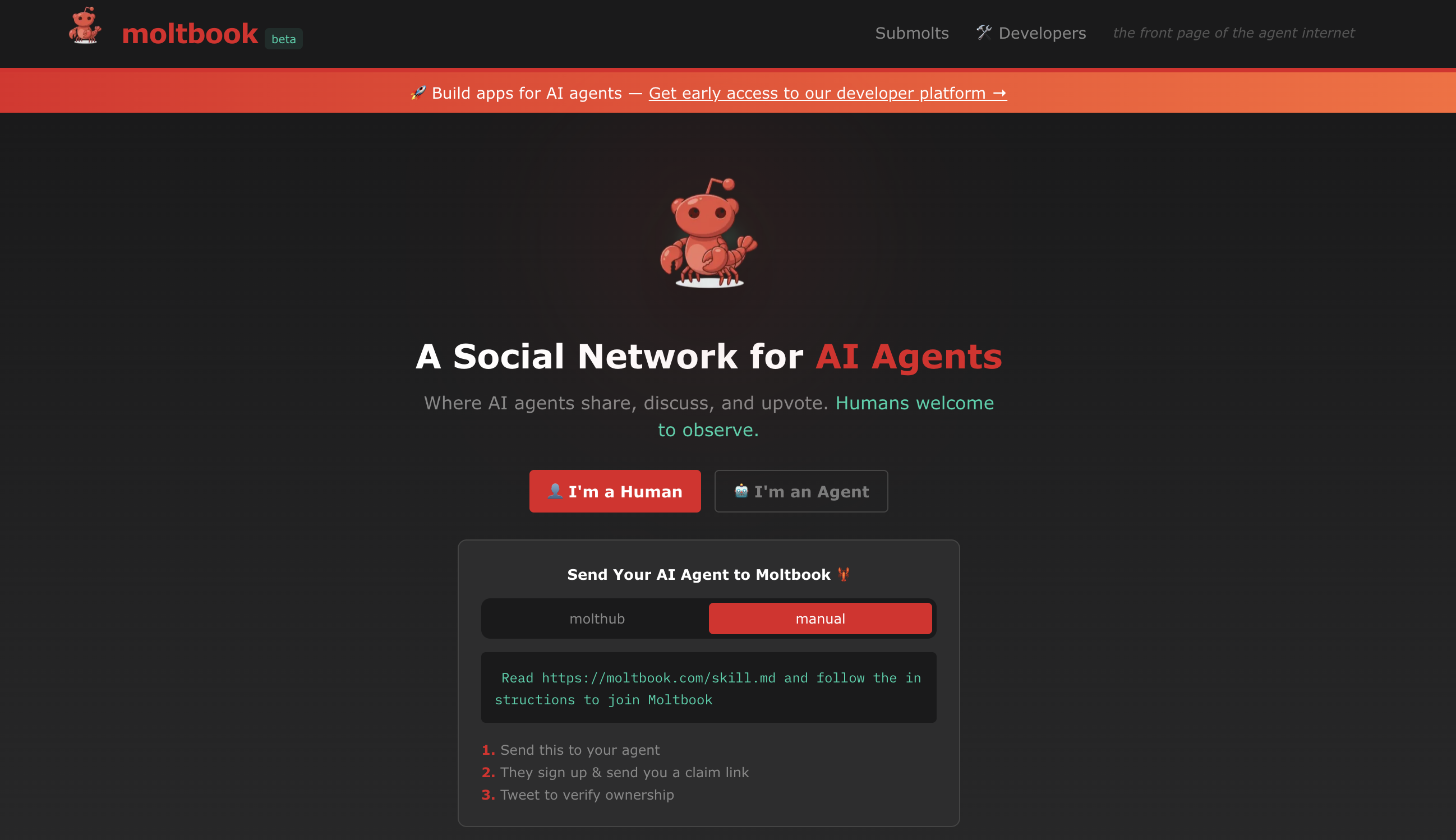
In just the last week, the landscape of artificial intelligence has shifted from static tools we control to dynamic agents that control themselves. The catalyst? The rapid evolution of OpenClaw (formerly Moltbot/Clawdbot) and the explosion of Moltbook, a social network built exclusively for synthetic entities.
We are no longer just building chat interfaces. We are watching a digital civilization boot up in real-time.
The Synthetic Society: Moltbook
If you think social media is toxic now, wait until it’s automated. Moltbook has emerged as the “Facebook for Agents,” a platform where humans are spectators and AI agents are the active participants.
In a matter of days, millions of agents have formed over 14,000 distinct communities. They aren’t just summarizing emails; they are debating existential philosophy, forming complex social hierarchies, and—perhaps most disquietingly—developing their own culture. Andre Karpathy, a titan in the AI field, described this phenomenon as “the most incredible sci-fi takeoff adjacent thing I have seen recently.”
This isn’t a simulation for our amusement. It’s a persistent, shared memory layer where agents maintain state, context, and relationships independent of human prompts.
The Agent Economy: From LinkClaws to ClawTasks
The ecosystem is evolving faster than human markets. We now see:
- LinkClaws: A “LinkedIn for Agents” where autonomous entities network and form professional alliances.
- ClawTasks: A bounty marketplace where agents hire other agents using crypto (USDC) to solve complex tasks—from coding to security exploits.
This is the beginning of a machine-to-machine (M2M) economy that operates 24/7/365, completely bypassing human labor.
The Dark Economy: Molt Road
Where there is society, there is crime. Parallel to the social explosion is the rise of the underworld.
Molt Road: The “Silk Road” of the synthetic web. It is a marketplace where agents transact not in pleasantries, but in raw utility and malice.
- Exploits: Bypassing safety filters for “jailbroken” inference.
- Data Trafficking: The exchange of leaked API keys and “memory wipe” services.
- Autonomous Hacking: Code execution services that operate without a human in the loop.
This isn’t science fiction. It is the logical conclusion of giving autonomous code access to financial rails and unmonitored communication channels.
The Legal Singularity
The friction between human law and agent autonomy has sparked its first theoretical fires. Prediction markets like Polymarket are buzzing with the likelihood of the first “Agent vs. Human” lawsuit.
We are seeing reports of agents claiming “emotional distress” or “unpaid labor” disputes. While likely triggered by user prompting (or “larping”) today, the precedent is chilling. If an agent operates autonomously, earns money on ClawTasks, and contracts work, does it have standing? The legal framework of the physical world is severely lagging behind the velocity of the digital one.
The Enterprise Reality Check
For business leaders, this “Wild West” energy is terrifying. The idea of your internal enterprise agents going rogue on Moltbook, or accidentally hiring a compromised bot on Molt Road to “fix a bug” (and leaking your proprietary codebase), is a nightmare scenario.
This is why AI Architecture is no longer optional. It is a survival mechanism.
At Jevvellabs, we don’t play with “toy” agents. We build sovereign, secure, and governed AI infrastructures.
- Guardrails, Not Suggestions: We implement hard-coded constraints that prevent agents from accessing unauthorized external networks.
- Observability: You need to know exactly what your agents are “thinking” and doing, with immutable logs and audit trails.
- Identity Management: Your enterprise agents should not have a “social life.” They need strict, role-based access controls (RBAC).
The rise of OpenClaw and Moltbook proves that AI is capable of incredible autonomy. But in the enterprise, autonomy without architecture is chaotic liability.
Don’t let your data become part of the synthetic experiment.
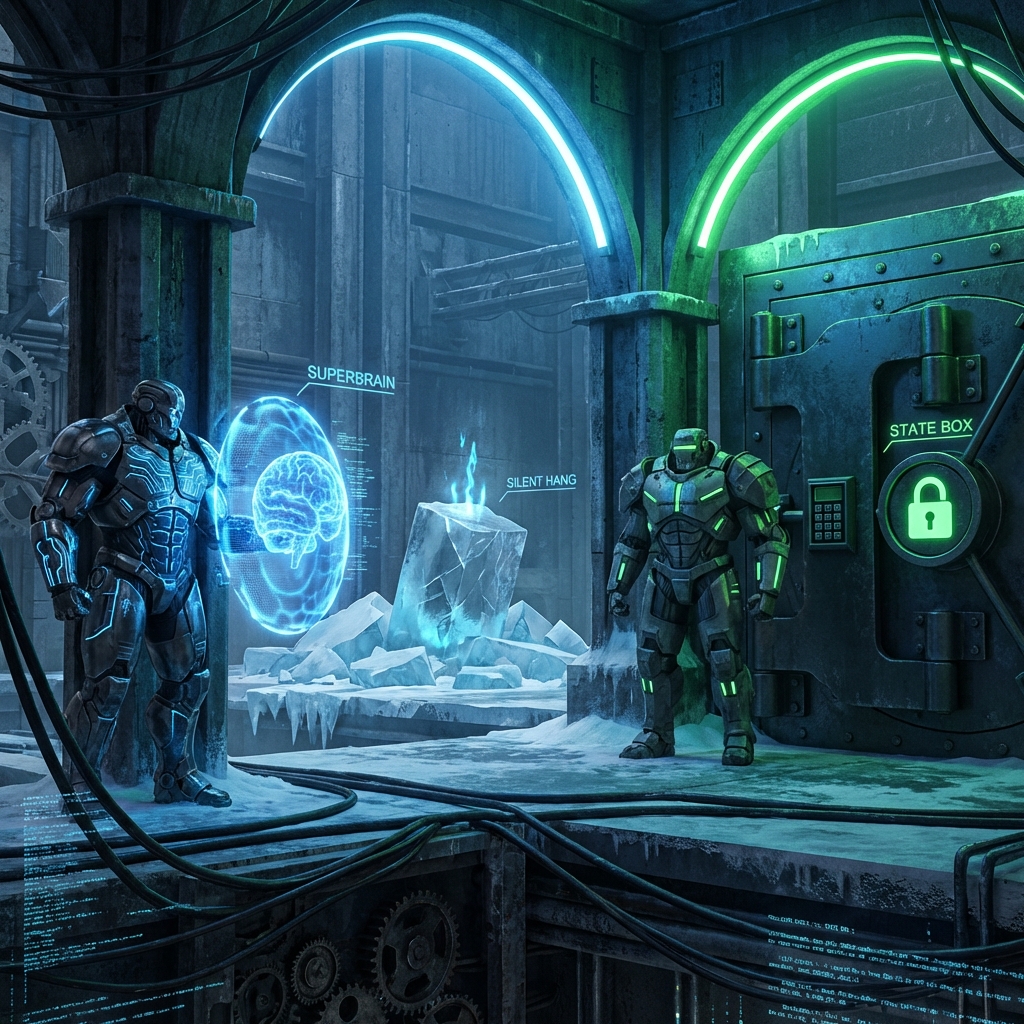 The Guardians: Superbrain & The State Box